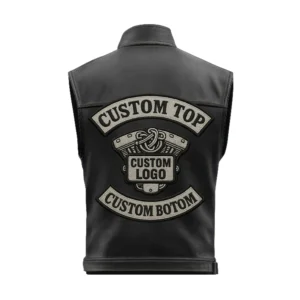
Custom Biker Vests
Custom motorcycle vests are iconic sleeveless jackets that have evolved into a staple of biker culture. Often crafted from genuine leather or heavy denim, these vest cutaways serve as both rugged riding gear and vivid style statements. Worn by club riders and casual enthusiasts alike, a classic vest typically features front closures, sturdy pockets, and an open design that accommodates layers. Over time, riders personalize each garment with embroidery, studs, and patches, turning it into a wearable album of their journey. In fact, the “colors” on the back panel – large embroidered emblems and rockers – identify a rider’s club and chapter, making each vest a bold badge of loyalty.
A Brief History of Biker Vests
The motorcycle vest has deep roots in postwar Americana. After WWII, many veterans returned home with leather flight jackets and a taste for the open road. Inspired by military insignia on their uniforms, they began cutting off the sleeves of their jackets to create lighter, more practical riding gear. By the late 1940s and early 1950s, emerging clubs such as the Hells Angels popularized this look. These early clubs adopted both leather and denim sleeveless jackets as their official attire – durable fabrics that stood up to road wear and could display club patches. The American Motorcyclist Association (AMA) even awarded prizes for “best-look” clubs, encouraging members to sew identifying patches onto their vests. From that point on, the custom vest (sometimes called a “cut”) became an enduring symbol of rider identity and defiance against the mainstream.
World War II veterans also brought back practical design elements: adjustable straps and multiple pockets for supplies. Over the decades, the vest took on mythic status. It was dramatized in films like The Wild One (1953) and “Hollister” riot stories, solidifying the biker image in popular culture. By the 1960s and ’70s, personalization exploded: riders stitched on everything from rally mementos to outlaw slogans. Among these groups, a fully patched leather vest became “a badge of honor and a symbol of freedom, rebellion, and brotherhood”. In short, the vest evolved from mere apparel into a mobile clubhouse – a way to silently declare one’s allegiance, history, and values on the open road.
Materials and Styles
Biker vests today come in a variety of fabrics and cuts, each with its own look and feel. The two most common are leather and denim, but you may also see textile or mesh vests for hot-weather rides. Each material has distinct advantages:
- Leather Vests: Made of cowhide, buffalo, goatskin or even lambskin, leather vests are the archetypal biker look. High-grade cowhide is extremely abrasion-resistant, making it a favorite among touring riders. Buffalo hide is heavier and more textured, while suede leather offers a softer, velvety finish. Leather vests are also versatile in style: you’ll find everything from simple plain-leather waistcoats to ornate designs with studs, fringe, or embossed details. They can be paired with button closures or rugged metal zippers, depending on the era of inspiration. A well-fitted men’s leather waistcoat should feel snug yet allow movement, often tapered at the sides for a flattering silhouette. Because leather is naturally water-resistant and strong, it provides decent wind protection, making it suitable even in cooler weather with layers underneath.
- Denim Vests: For warmer months or a vintage vibe, denim is a popular alternative. Denim cut-off jackets were already popular among bikers in the 1950s for their durability and affordability. Modern denim motorcycle vests come in many washes and styles – from classic dark indigo to faded blue or jet-black. Vintage-inspired versions often feature intentional distressing: frayed edges, rips, or bleached patternsm
. Some are hooded or have quilted inserts for a contemporary twist. The advantage of denim is its breathability and light weight, making it comfortable on hot rides. It’s also very easy to customize: denim accepts embroidery, fabric patches, and even iron-ons without much fuss. Today’s jean vests range from traditional trucker-style cuts with chest pockets and buttons to more tailored slim-fit designs for modern style.
- Other Fabrics: In recent years, textile vests (nylon or polyester) and mesh vests have gained popularity for track or sport riding, thanks to their ventilation and lightweight feel. These often include built-in armor pockets for additional protection. However, for classic “biker aesthetics,” leather and denim remain the dominant materials.
Whether leather or denim, a vest’s style can also be defined by its hardware and cut. Snap-front vests evoke a retro military or café-racer look, while zippers read more punk or modern. Some riders add side-lacing or elastic panels to adjust fit. Leather patches or embroidered designs are often pre-attached to the vest during manufacturing, but most owners add custom patches after the fact to tell their personal story. In any case, a high-quality vest should have reinforced seams, sturdy closures, and a fit that allows freedom of movement while riding.
Personalization and Patches
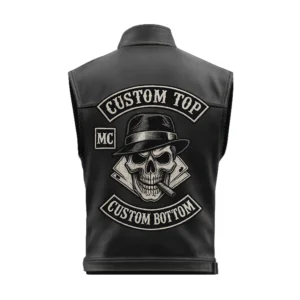
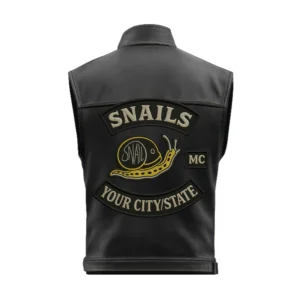
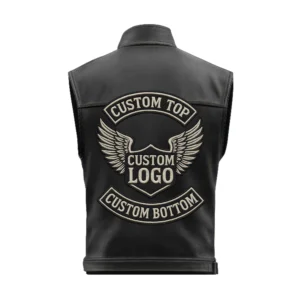
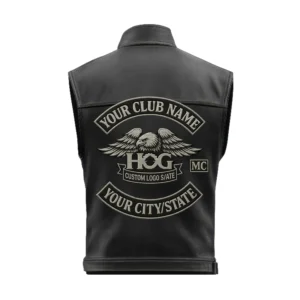
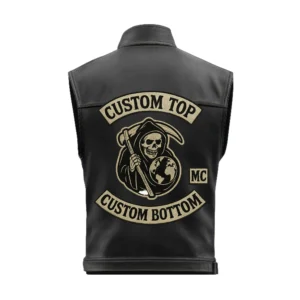
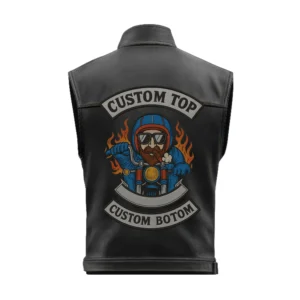
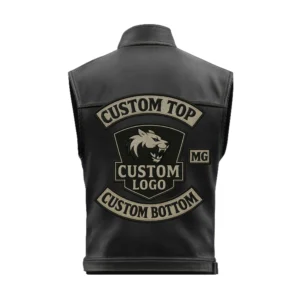
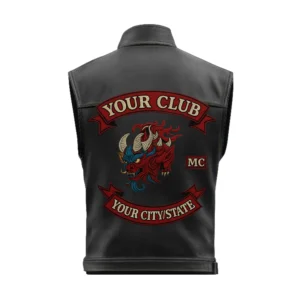
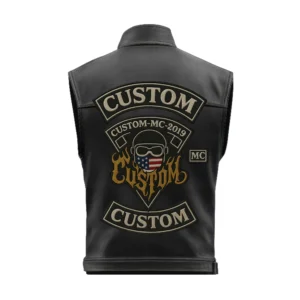
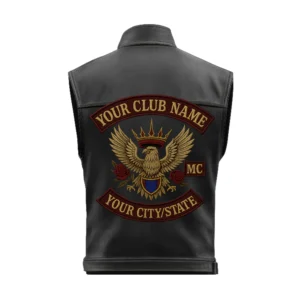
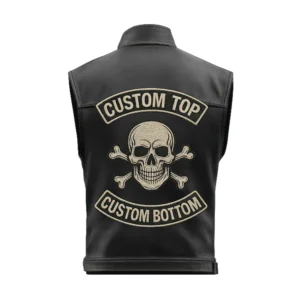
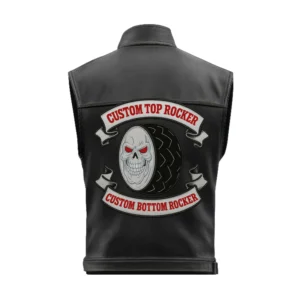
A hallmark of the custom biker vest is its decoration. Patches and embroidery turn an ordinary garment into a unique statement piece. In biker tradition, every piece has meaning. Club insignia patches (often called “colors”) go on the back in a three-part arrangement – top rocker (club name), central logo, and bottom rocker (location). Chest patches usually include smaller logos, rank, or the rider’s name, while collar tabs or side panels might indicate a chapter role or special achievement. Even decorative patches of skulls, flags, or favorite slogans are carefully placed so as not to conflict with formal emblems.
Proper placement matters: the front left chest is traditionally reserved for the most important patches (like a club logo), and the lower back is holy ground for the full-color emblem of a motorcycle club. It’s a point of pride that a vest is rarely considered “complete” until all the flaps and panels are filled with stories in thread. (In fact, many club customs require a new member to earn the right to display a full set of patches, as a symbol of loyalty and accomplishment.)
Beyond club insignia, riders often add biker patches that reflect personal interests – such as favorite brands, military service, or rally participations. For example, embroidered winged skulls or an American flag are common. These can be ironed or sewn on to any vest. The patch business is so robust that there are entire catalogues of rocker patches, top and bottom bars, and one-off emblems for every possible theme. Designers also incorporate studs, embroidery, or even fringe to customize the vest’s look.
Embedding personal patches onto a denim or leather vest is straightforward. The base garment often has blank, reinforced areas on the back and chest where patches attach. Riders typically space them out for balance: a large centerpiece on the back, with smaller patches filling the collar, pockets, and sides. This results in a tapestry that both identifies the rider and tells a story – for instance, which rallies they’ve attended or which causes they support. In short, the customization of a biker vest is an art form that blends craftsmanship with personal expression.
Men’s and Women’s Cuts
Both men and women wear custom vest jackets, but the cuts are tailored to each. A typical men’s motorcycle vest has a straighter cut and broader shoulders, allowing room for layering over T-shirts or even armor. Many men’s vests have a slightly boxier shape. Women’s biker vests, on the other hand, often feature a subtly tapered or curved waist and sometimes darts or extra seams so they flatter the female figure
arcanefox.com
. Some brands offer womens’ vests with adjustable side straps or elastic panels to better fit the hips and waist. Sizes range from extra-small up to plus sizes, and some designers create unisex leather cuts that both men and women love for their classic lines.
Historically, women’s biker vests emerged as practical gear that acknowledged women’s place in the motorcycling communityBy mid-20th century, as more women joined club rides and rallies, manufacturers began making vests specifically for them. Modern women’s vests may come in feminine colors or with embellishments, but they retain the same spirit: independence and strength on the road. Today, female riders can choose from a full lineup of leather, denim, and textile vests just like men do. For example, many retailers note that denim motorcycle vests “are available for both men and women,” reflecting their universal appeal.
Whether men or women, the key is finding the right fit. A vest should be snug but not restrictive. It’s wise to try it on with the layers you’ll wear underneath – a T-shirt or long-sleeve shirt. Look for adjustable features (straps or laces on the sides) to fine-tune the fit. Many vests also allow a removable liner or a place to insert a back protector, which appeals equally to both genders. In essence, a well-made leather or denim vest can be styled to suit any rider’s silhouette – from masculine and rugged to sleek and tailored.
Styling and Use
One of the great things about a custom vest is its versatility in styling. For a casual biker look, pair a vest with a simple tee or plaid shirt and your favorite jeans. The vest instantly adds rugged flair. During cooler weather, a leather vest can go over a hoodie or denim jacket for extra warmth and edge. Biker boots and a bandana complete the classic ensemble. In fact, even dressier outfits can incorporate a vest: some riders slip a crisp western-style shirt under their leather vest for a smart-casual vibe at bars or motorcycle-themed gatherings.
Custom vests also shine at events and rallies. Imagine rolling into a motorcycle rally on a sunny day: wearing a light denim jacket reworked as a vest, emblazoned with club logos and event patches. Not only does it mark you as a fellow enthusiast, it keeps you cool by exposing your arms to the breeze. And at large gatherings like Sturgis or Daytona Bike Week, a bold vest top is a conversation starter – riders admire each other’s choices of insignia and craftsmanship.
Ultimately, wearing a biker vest is as much about feeling as function. It’s a wearable symbol of the open road and rider independence. A well-worn vest on a Sunday cruise carries stories of past tours and brotherhood. (Riding along a coastal highway with the wind blowing through a sleeveless jacket epitomizes that rebel-with-a-purpose image.) Properly cared for, a leather vest will soften and develop character with age, while denim ages with authentic vintage flair. Many riders get their vests professionally cleaned and conditioned to preserve the patches and leather – just like any prized garment. In any case, this hallmark piece isn’t just apparel; it’s a statement: for both men and women, a custom vest boldly announces your place in the motorcycle community and adds undeniable style to the ride.
Choosing Your Vest
When shopping for a custom vest, consider these factors:
- Material: Leather vests offer maximum durability and a classic look, whereas denim vests are lightweight and breathable. Some riders even choose faux leather or textile for budget or ethical reasons. Pick what suits your climate and preference.
- Fit: Measure your chest and waist to find a size that feels snug when zipped or snapped up. A vest should allow a bit of movement and layering. Adjustable sides or laces can help if you’re between sizes.
- Design: Look for comfortable shoulders and enough room to move your arms freely. Decide if you want features like a removable liner, waist belt, or large pockets. The style should match your taste – traditional biker cuts, vintage fringe, or modern minimal.
- Customization: Many merchants offer custom builders where you can choose leather type, color, and add built-in artwork. If you prefer to add patches later, ensure the vest has blank panels (especially on the back) for ironing or sewing them on.
- Protection: Remember, a vest is primarily for style. If safety is a concern, some riders opt for armored vests with built-in padding. Otherwise, combine the vest with a full riding jacket or place CE-rated armor inserts in it for added impact protection.
By considering these factors, you’ll find a vest that not only fits well and looks great but also functions for your riding needs. For example, a rider might choose a men’s genuine leather waistcoat with a thick lining for winter touring, while another opts for a women’s lightweight denim cut-off covered in floral embroidery for summer rides. The key is quality craftsmanship: thick hides, reinforced stitching, and solid hardware will ensure the vest lasts for thousands of miles.